In this article
Exporting goods from Spain means meeting a series of requirements and providing documents that ensure compliance with international regulations and make the customs process easier. The main ones are:
1. Commercial documents
- Pro forma invoice: a preliminary document sent by the exporter to the buyer setting out the terms of sale, description of the goods, prices and conditions.
- Commercial invoice: the main document supporting the transaction, issued once the order is confirmed. It includes detailed information on the products, prices, terms of sale and the details of the parties involved.
- Packing list: specifies the contents of each package, including details such as weight, dimensions and a description of the goods.
2. Customs documents
- Single Administrative Document (SAD, or DUA in Spain): the official declaration used for customs clearance, containing detailed information on the goods, their value and other relevant data. It is essential for the fiscal and statistical control of foreign trade operations.
- EORI number (Economic Operator Registration and Identification): the registration and identification number required for all companies carrying out import or export activities within the European Union. In Spain it is obtained from the Tax Agency.
3. Certificates and licences
- Certificate of origin: a document certifying the country of origin of the goods. It is required by customs authorities in some international markets.
- Health or phytosanitary certificates: for products of animal or plant origin, a certificate issued by the competent health authorities is required.
- Export licences: for goods subject to special regulations, such as chemical products or sensitive technology, a specific export licence may be required.
4. Transport documents
- Bill of Lading (B/L): for sea shipments, the document issued by the shipping line certifying the cargo and its conditions of carriage.
- Air Waybill (AWB): for air shipments, the document supporting the contract of carriage between the exporter and the airline.
- CMR consignment note: for road transport, it governs the carriage of goods between countries.
The importance of a third-party logistics provider
Managing export documentation can be complex and requires technical knowledge of foreign trade and customs. To avoid errors, delays and unnecessary costs, it is advisable to rely on a third-party logistics provider to advise on and manage all the necessary documentation.
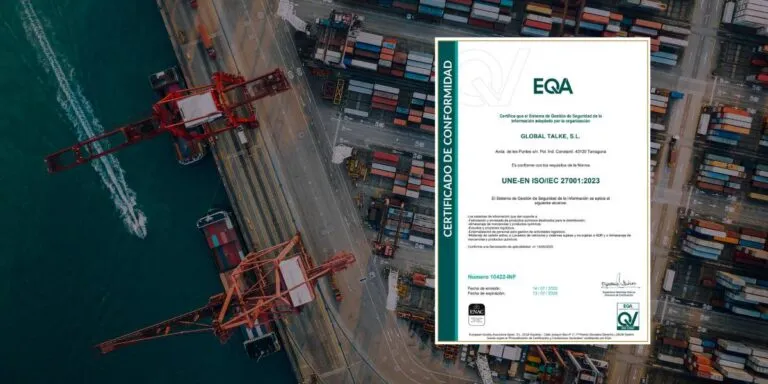
Global-TALKE: a company for exports
Global-TALKE is a company specialising in logistics and exports that offers a comprehensive third-party logistics service to simplify the process and guarantee that all operations comply with the applicable regulations. Having export management experts on your side lets you save time, avoid errors and make sure your goods reach their destination without problems. If you are thinking of exporting, you can rely on Global-TALKE to make your operation a success. Contact us and we will look at your case.