In this article
If your company imports or exports goods, a customs warehouse can become a key tool for optimising costs, ensuring regulatory compliance and gaining operational flexibility. Below you will find a clear guide to what it is, what it is for and when it is worth using one.
What is a customs warehouse?
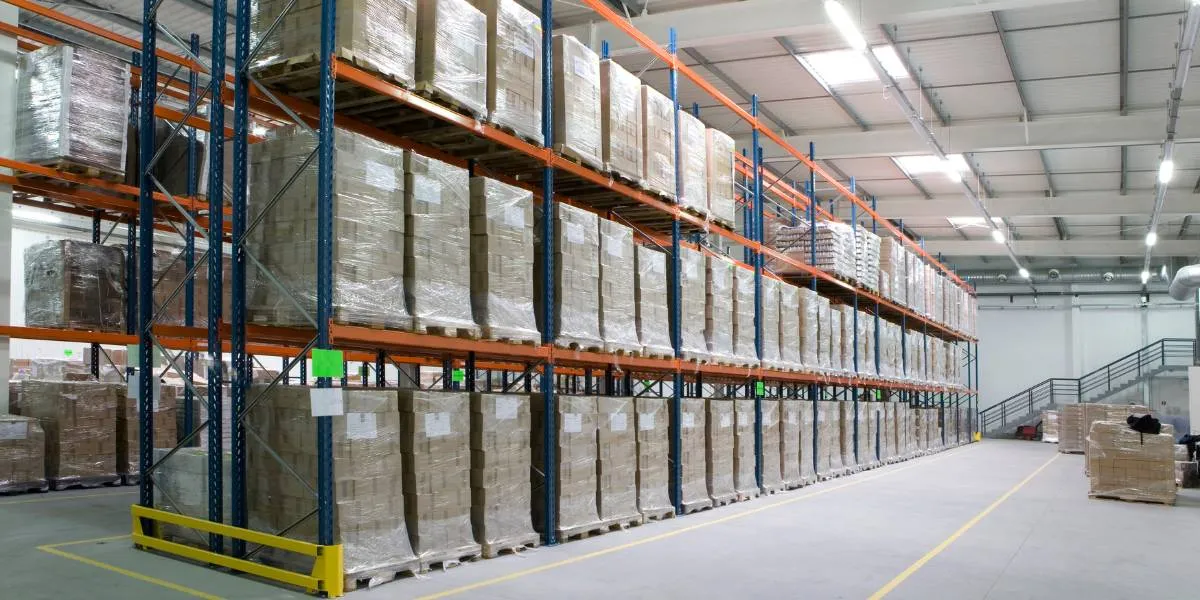
A customs warehouse is an authorised facility under Customs control where goods can be deposited without release for free circulation for a given period. While the goods remain under this procedure, no customs duties or import taxes are paid (and, depending on the case, no VAT is charged either) until their final destination is decided (import, re-export, transfer to another procedure, etc.). In practice, you gain time to decide what to do with your international stock without tying up cash in taxes, while maintaining traceability and customs compliance.
What is a customs warehouse for?
- Deferring duties and taxes: you pay only when the goods are released (or not at all if they are re-exported).
- Optimising cash flow: less capital tied up in seasonal or high-value imports.
- Consolidating and distributing: receipt from multiple origins for subsequent picking and dispatch to different destinations.
- Facilitating re-exports: the option of shipping to third countries without clearing customs in the country of storage.
- Permitted value-added operations: usual forms of handling such as relabelling, quality control or repackaging, subject to authorisation.
- Reducing the risk of tax obsolescence: you are taxed only on what you actually sell or import.
Common related arrangements
Terminology varies by country and current legislation, but in day-to-day logistics these arrangements usually come up:
- Customs Warehouse (DA in Spain): a procedure that allows uncleared goods to be stored under customs control with suspension of duties and taxes.
- Non-Customs Warehouse (DDA in Spain): geared towards VAT in certain cases; useful for deferring the tax on domestic operations.
- Temporary Storage Facility (ADT in Spain): limited stay while the customs procedure for the goods is decided after their arrival.
- Free zones: designated areas with specific customs benefits and controls.
Before operating, it is advisable to check with your customs agent or representative the exact scope, permitted storage periods and permitted operations under each arrangement.
Quick comparison
| Arrangement | Main purpose | Taxes | Typical operations |
|---|---|---|---|
| Customs Warehouse (DA) | Storing imports without release for free circulation | Suspension of duties and, depending on the case, VAT | Preservation, control, relabelling, permitted repackaging |
| Non-Customs Warehouse (DDA) | Optimising VAT management in certain operations | VAT deferral | Receipt, storage, distribution under tax control |
| Temporary Storage Facility (ADT) | Holding goods while the procedure is decided | Not yet cleared; limited time | Documentary and physical checks, transits |
Who benefits most from a customs warehouse?
- Importers with variable turnover or high-value products.
- Exporters distributing from a hub to several countries.
- International e-commerce with seasonal peaks.
- Chemical, pharma and industrial companies that need traceability, batches and expiry dates.
- Aftermarket and spare parts with uncertain or slow demand.
Basic requirements for operating as a customs warehouse client
- EORI number and up-to-date tax details.
- Commercial and transport documentation (invoice, packing list, bill of lading, etc.).
- Correct tariff classification (HS/TARIC codes) and customs value.
- Customs representation (direct or indirect) and the appropriate powers of attorney.
- Traceability by batch/serial number and real-time inventory records.
- The operator's security requirements (access, inspections, applicable regulations).
Good practices for maximising the benefit
- Plan storage periods and reviews to avoid costs for exceeding time limits.
- Define Incoterms and documentary responsibilities with your suppliers.
- Align your WMS/ERP with customs accounting and stock statuses.
- Establish protocols for permitted handling (repackaging, checks, relabelling).
- Coordinate the possible destinations (free circulation, transit, re-export) with your customs agent.
How Global-TALKE helps you
At Global-TALKE we combine customs services with advanced logistics management: a WMS with customs stock, batch traceability, permanent inventory, coordination with customs representatives and permitted handling (quality control, relabelling, repackaging). You get control, compliance and logistics ready to distribute to multiple destinations with tax efficiency.
If you would like to assess how a customs warehouse can improve your supply chain, we will be glad to review your case and propose an operating model aligned with your objectives.