In this article
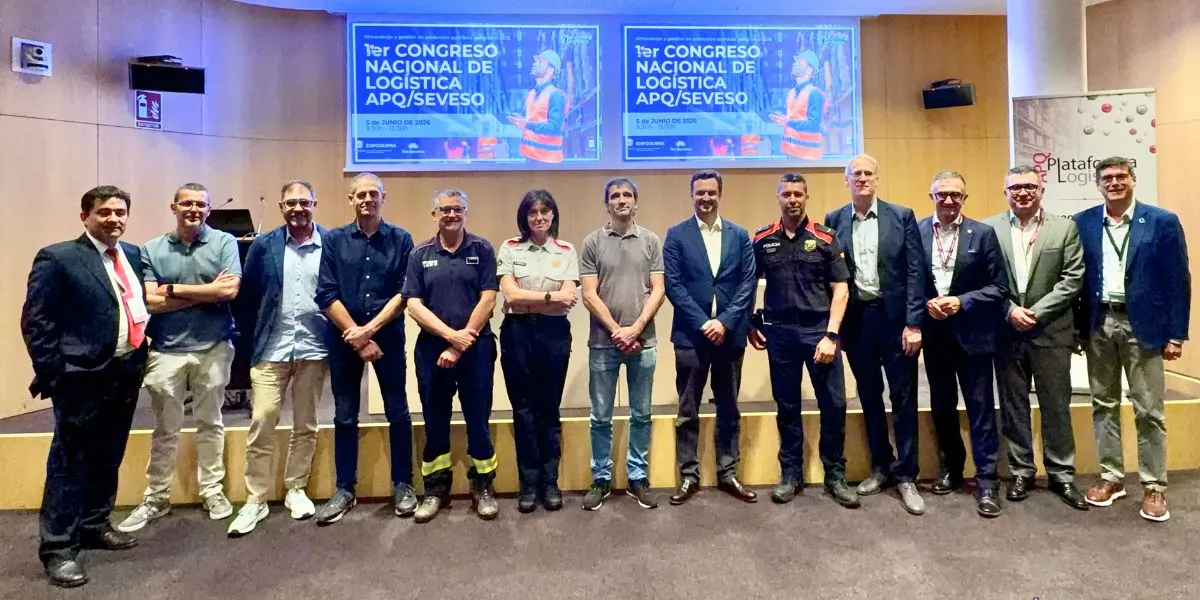
The event, organised by APQ Plataforma within the framework of Expoquimia 2026, was held in Barcelona last June and focused on risk management, coordination and prevention in the logistics of dangerous chemical products.
The conference, attended on behalf of Global-TALKE by its Quality, Environment and Safety Director, Montserrat Marauri, brought together manufacturers, distributors, warehouse operators, logistics providers, insurers and public authorities with a common goal: moving towards safer, better coordinated and more professional chemical logistics.
Safety, a shared responsibility
The congress addressed some of the main challenges linked to the storage, transport and management of dangerous chemical products. Among them, environmental responsibility, emergency planning, safety and coordination between companies, authorities and emergency services stood out.
The presentations made clear that safety does not depend on a single party but on the effective collaboration of everyone involved in the logistics chain, especially in activities subject to regulations such as the SEVESO Directive and the requirements applicable to the storage of APQ chemical products.
Environmental management and regulatory compliance
The congress also addressed the legal obligations relating to environmental liability and the need to adopt preventive, containment and remediation measures against possible damage.
In this area, the value of rigorous risk management, immediate access to safety data sheets, the traceability of goods and the availability of adequate resources to respond to incidents involving dangerous products was highlighted.
Towards more professional chemical logistics
The conference also served to put new commitments for the future on the table, including the promotion of specialised training for the different profiles involved in dangerous goods logistics and the strengthening of collaboration between companies, authorities and insurers.
For Global-TALKE, taking part in events of this kind is an opportunity to keep sharing knowledge, strengthen the safety culture and contribute to the development of better prepared, more efficient and more responsible chemical logistics.
Safety, prevention and coordination remain fundamental pillars for guaranteeing reliable, sustainable operations across the entire value chain.