

Irritant chemical: definition, examples and how to store them safely
If your company manages irritant chemicals, choosing a specialized operator to store them is key to protecting your people, your inventory and your reputation. Below you will find a practical, decision-oriented guide: what an irritant is, how it is classified, common examples, and what you should require from your logistics partner.
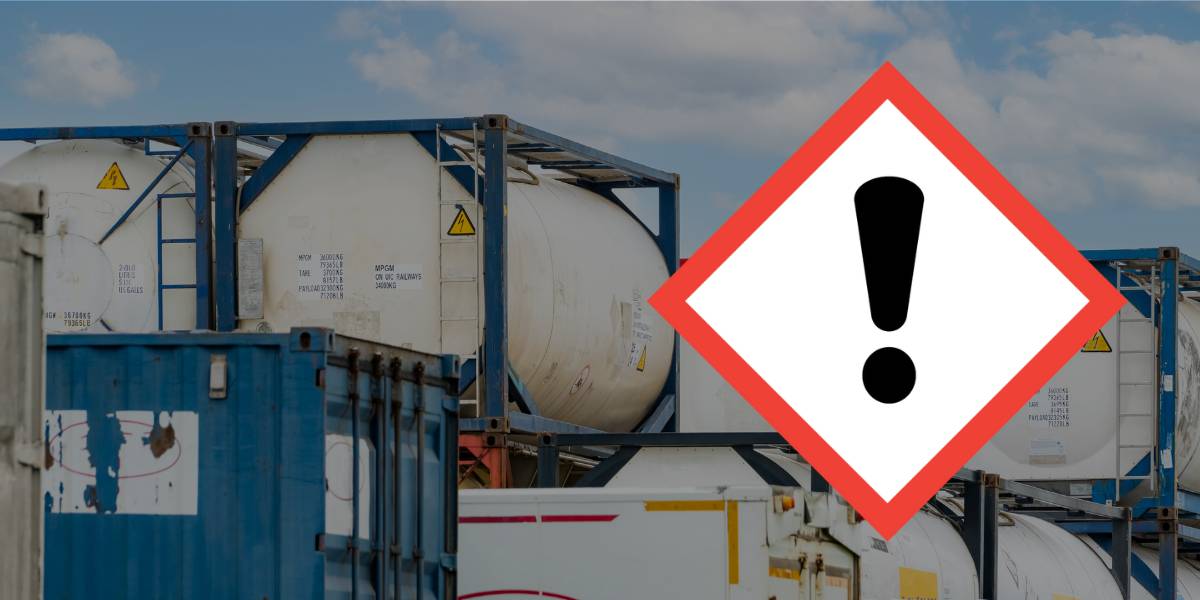
Brief definition: An irritant chemical is a substance or mixture that causes reversible inflammation of skin, eyes or respiratory tract after brief or repeated exposure. In CLP/GHS it is usually identified with the GHS07 (exclamation) pictogram and hazard statements such as H315, H319 or H335.
Why outsource the storage of irritants to a specialized operator
- Reduced operational risk: facilities designed for safe handling, ventilation, containment and signage.
- Regulatory compliance: application of CLP/GHS, procedures and traceability (SDS, batch/expiry records).
- Service continuity: emergency protocols, trained staff and preventive maintenance.
- Controlled costs: fewer incidents, lower shrinkage and faster replenishment thanks to inventory visibility.
- Scalability: capacity for seasonal peaks and projects with requirements by chemical family.
CLP/GHS labelling: pictogram, key H-codes and P-codes
Always check the label and the Safety Data Sheet (SDS). Irritants typically carry:
- Pictogram: GHS07 (exclamation).
- Common hazard statements: H315 (skin irritation), H319 (serious eye irritation), H335 (respiratory irritation).
- Typical precautionary statements: P264, P280, P302+P352, P305+P351+P338, P312.
- Key documentation: SDS (sections 2, 4, 7, 8 and 13) and an up-to-date CLP label.
Differences: irritant vs. corrosive vs. sensitizer
| Class | Typical effect | Reversibility | Pictogram |
|---|---|---|---|
| Irritant | Redness, stinging, cough | Generally reversible | GHS07 (exclamation) |
| Corrosive | Deep chemical damage | Often irreversible | GHS05 (corrosion) |
| Sensitizer | Allergic reaction after exposures | May persist | GHS07 (exclamation) or others as applicable |
Common examples in logistics
Irritation depends on concentration, pH, volatility and exposure time. Typical warehouse examples include:
| Family / example | Irritation risk | Usage notes |
|---|---|---|
| Alcohols (ethanol, isopropanol) | Skin, eye and inhalation | Also flammable; require ventilation and ignition control. |
| Ketones (acetone, MEK) | Skin and eye | Highly volatile; dry out skin and mucosa. |
| Surfactants / detergents | Skin and eye | Irritation linked to concentration. |
| Dilute acids and bases (acetic, citric; dilute NaOH) | Skin and eye | At higher concentrations they can be corrosive. |
| Aromatic solvents (xylene, toluene) | Eye and respiratory | Need effective ventilation and suitable PPE. |
| Mild oxidizers (dilute hypochlorite) | Eye and respiratory | Do not mix with acids or ammonia: risk of irritating gases. |
Safe storage checklist
- Legible CLP labels and SDS accessible at point of use.
- Compatible, closed containers on bunds/drip trays.
- Compatibility segregation (acids/bases/oxidizers/solvents).
- Ventilation and extraction for transfers; ignition source control.
- PPE available and signage for showers/eyewash stations.
- Inventory with lots, expiry dates and rotation (FIFO/FEFO).
- Spill plan with suitable absorbents and approved containers.
What to do in case of exposure to an irritant
- Skin contact: remove contaminated clothing. Wash with soap and water for ≥15 minutes. Check the SDS (Section 4).
- Eye contact: rinse for 15–20 minutes, keep eyelids open. Remove lenses. Seek medical advice if irritation persists.
- Inhalation: move to fresh air; if coughing or dyspnea occurs, seek medical attention.
- Ingestion: do not induce vomiting unless instructed by a physician. Rinse mouth and contact toxicology services.
Note: always follow your internal procedures and the specific instructions in the product’s SDS.
Transport and signage: key points
The health hazard classification for storage (CLP/GHS) does not always match the transport classification (ADR/IMDG/IATA). The same product may be, for example, a flammable liquid (Class 3) and also an irritant. Always check SDS Section 14, UN number, packing group and package/vehicle signage.
Frequently asked questions
– Which pictogram identifies an irritant product?
GHS07 (exclamation), common for skin/eye irritants and STOT SE 3 (respiratory).
– Does an extreme pH imply corrosivity?
Very low or high pH may indicate corrosivity, but classification depends on toxicological data. Check the SDS and label.
– Can I transport an irritant as “non-dangerous”?
Not necessarily. Transport classification may differ from CLP. Review SDS Section 14 and ADR/IMDG/IATA rules.
How Global-TALKE helps you
At Global-TALKE we provide specialized facilities for chemical storage, compatibility segregation, WMS with batch traceability, operating procedures for transfers and safe handling, and staff trained in CLP/ADR. We integrate ventilation, secondary containment and emergency plans to protect your team, your facilities and your supply chain.
If you wish to review your portfolio of irritants and improve safety and compliance, we will analyze your case and propose a tailored storage plan.
