

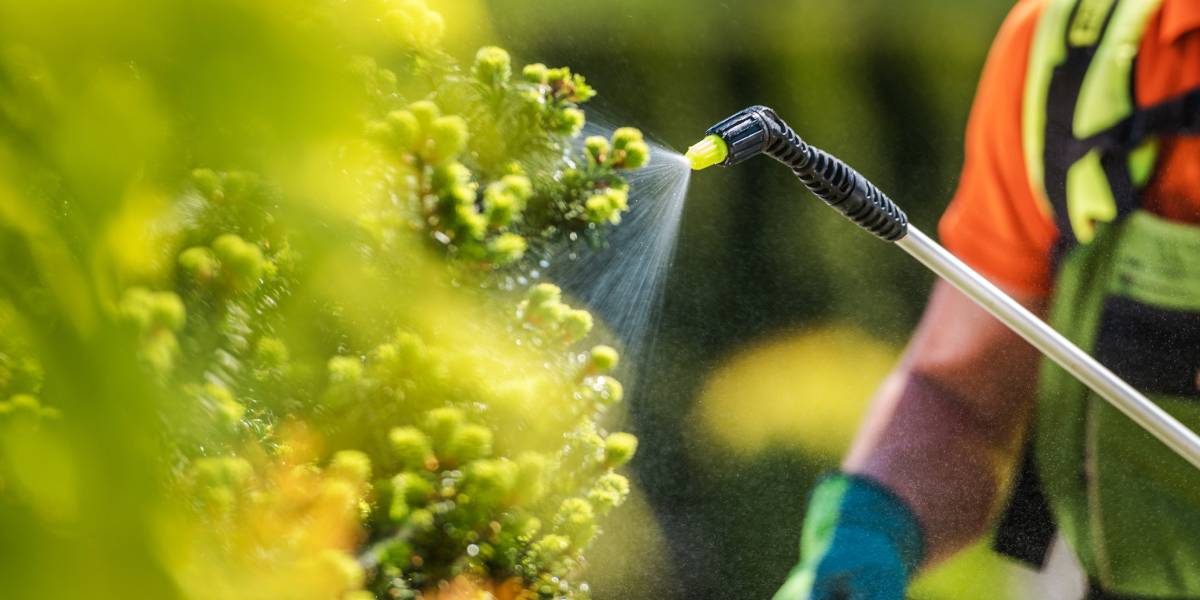
What are plant protection products and what types are there?
If your company markets or uses plant protection products, having a logistics operator that understands their specifics is key to ensuring safety, regulatory compliance and product availability. This guide explains what they are, how they are classified and what you should consider for their storage.
What is a plant protection product and what is it used for?
A plant protection product (also called a crop protection product) is any substance or mixture intended to prevent, destroy, attract, repel or control harmful organisms in crops, or to regulate the physiological processes of plants. Their use is regulated and requires proper labelling, a Safety Data Sheet (SDS) and, where applicable, specific authorisations. They should not be confused with biocides for non-agricultural use (disinfectants, urban rodenticides, etc.), which follow different regulatory frameworks.
Main types of plant protection products
The most common classification is by target organism and by mode of action. Below is a practical summary with examples frequently seen in logistics and distribution.
| Type | What they control | Examples of active substances | Logistics notes |
|---|---|---|---|
| Herbicides | Weeds | Glyphosate, 2,4-D, sulfonylureas | Some are flammable liquids or irritants; follow the SDS and maintain ventilation. |
| Fungicides | Fungi and moulds | Copper (oxychloride), azoxystrobin, mancozeb | Moisture control; avoid extreme temperatures and cross-contamination. |
| Insecticides | Insects and larvae | Pyrethroids, spinosad, Bacillus thuringiensis | Some may be toxic by inhalation; segregation and PPE during handling. |
| Acaricides | Mites | Abamectin, hexythiazox | Tightly closed containers; control spills with bunds/drip trays. |
| Nematicides | Soil nematodes | Fluopyram, oxamyl | Check chemical compatibility; keep away from food/feed. |
| Growth regulators | Plant physiology | Gibberellins, auxins, ethephon | Protect from light/temperature as per label. |
| Molluscicides | Slugs and snails | Ferric phosphate, metaldehyde | Store dry; avoid humidity and water contact. |
| Attractants/pheromones | Monitoring and mating disruption | Pest-specific pheromones | Temperature-sensitive; often require cold or shade. |
Besides the type, it is important to know the formulation type, which directly affects handling and risk: EC (emulsifiable concentrate), SC (suspension concentrate), SL (solution), WG (water-dispersible granule), WP (wettable powder), GR (granule), ULV (ultra-low volume), among others.
Labelling and safety: essentials
- CLP/GHS label and SDS: check pictograms (flammable, toxic, corrosive, irritant), H- and P-statements, and response measures.
- Authorisation number and batch/expiry: essential for traceability and recall.
- Compatibility: do not rely on generalisations; follow SDS Sections 7 and 10 for storage and incompatibilities.
- Transport: ADR/IMDG/IATA transport classification may differ from warehouse hazards; check SDS Section 14.
Good storage practices for plant protection products
- Dedicated, segregated areas away from food, feed and office materials. Restricted access and signage.
- Ventilation and temperature control as per label (avoid frost and excessive heat).
- Secondary containment (bunds/drip trays) for liquid containers and transfer areas.
- Compatibility: separate oxidisers, corrosives, flammables and toxics from other families; never mix incompatible products.
- Sound, closed packaging; periodic inspections and quarantine for damaged containers.
- WMS inventory with batch/expiry and FEFO rotation (first-expire, first-out).
- Emergency kits: absorbents, neutralisers, PPE, showers/eyewash and clear procedures.
- Waste management (empty/contaminated packaging) via an authorised waste manager.
Frequently asked questions
– Are plant protection products always hazardous?
Not necessarily, but many can be flammable, toxic or irritant. Hazard level and controls depend on the active substance and formulation. The label and SDS are the reference.
– How do they differ from biocides?
Plant protection products are used in agriculture/on plants; biocides include disinfectants, material protectants or pest control in non-agricultural settings. Regulatory framework and authorisations differ.
– What documentation do I need to store them?
Up-to-date labels, SDS, batch and expiry records, plus evidence of staff training and procedures. Your logistics operator should provide stock reports and KPIs.
How can Global-TALKE help you with your plant protection products?
At Global-TALKE we provide specialised facilities for storing plant protection products, with compatibility segregation, WMS with batch and expiry traceability, secondary containment and emergency protocols. Our team is trained in CLP/ADR and safe-handling procedures to ensure continuity and compliance.
If you wish to assess your portfolio of plant protection products and optimise storage, we will be pleased to review your case and propose a tailored operating model.
